-
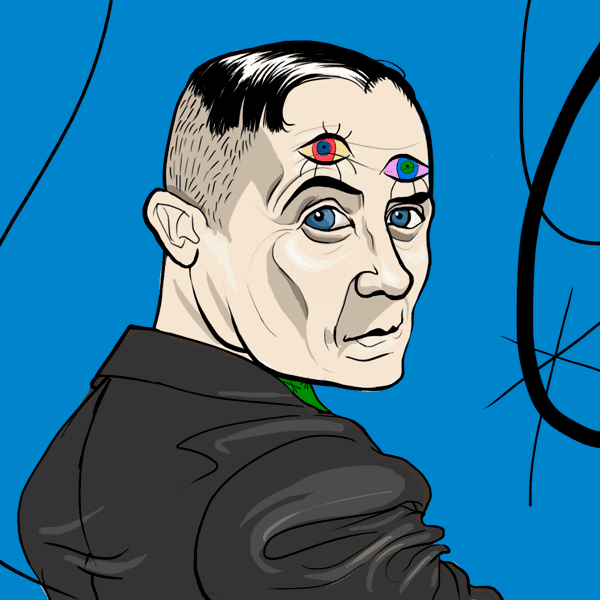
 An artist's gift to La Rambla
 -

If possible, I’d like to go beyond easel painting
-

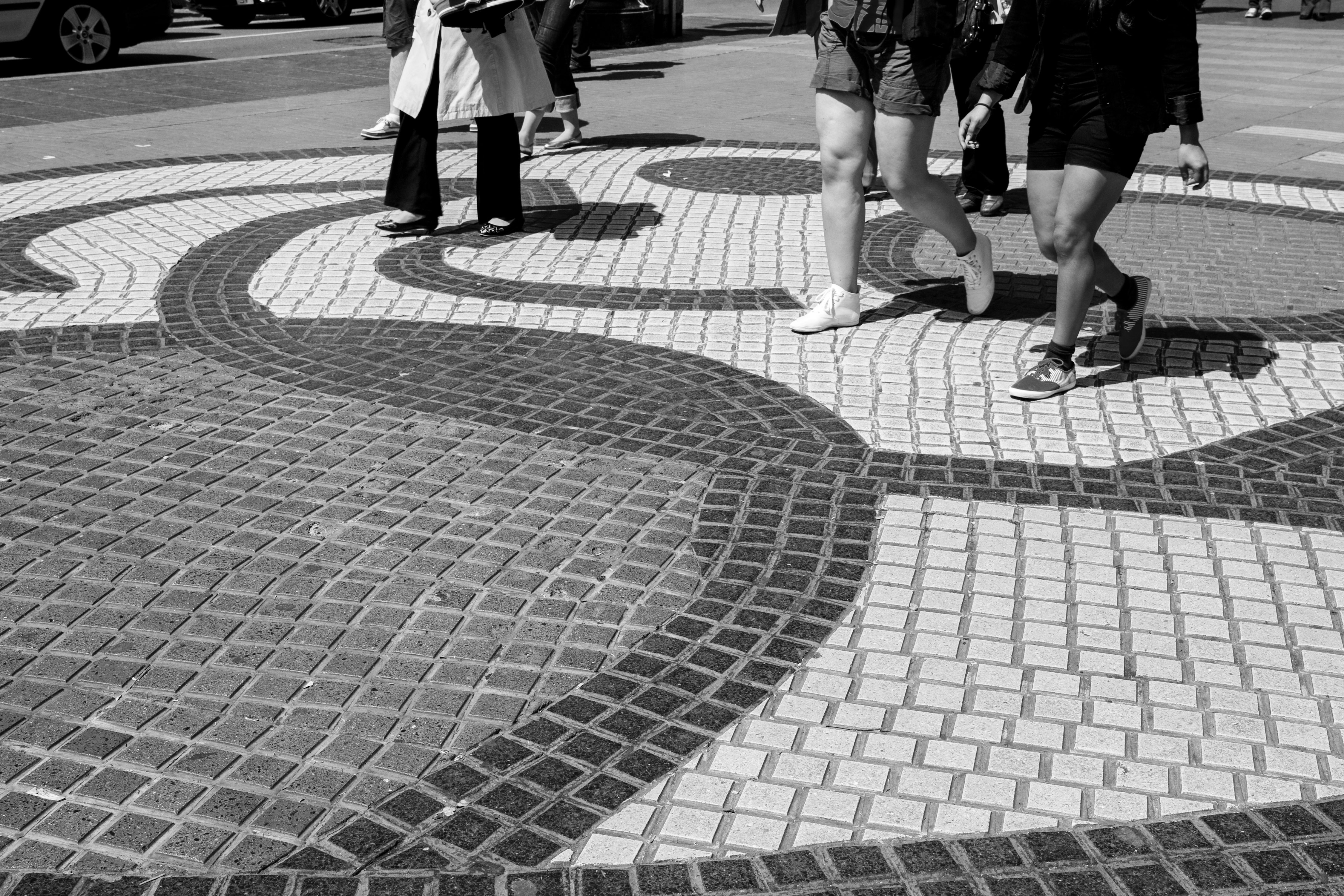 the other gifts from MiróIf there is an artist who has left a mark in La Rambla, this is Joan Miró (Barcelona, 1893-Palma, 1983). In 1968 he was assigned to decorate the facade of Prat Airport Terminal 2. In that moment, he decided to donate two other works: a sculpture for the Cervantes Park (never executed) and famous Pla de l’Os Mosaic or Miró Pavement. It was unveiled on December 23rd, 1976. Days after, he went for a walk through the Rambla, lending an ear to people’s reactions. Someone pointed that the tiles were badly placed. The painter replied: "You don’t know how difficult was to convince workers to place pieces in an irregular way!".
 -
 A human artworkMiró’s artwork embelishes La Rambla’s heart, which is composed of 6,000 tiles drawing a circular shape with an arrow inside to guide the traveler how to enter the city. The colors are red, yellow, white, black and blue, Miró’s habitual palette. Almost 80 million people each year walk on this urban carpet. After 17A terror attack, Miró’s Mosaic became a reject symbol and a tribute to the victims. In a few hours, it was covered by condolence messages and bunches of flowers. All in a spontaneous way.
 -
Beyond painting
 Joan Miró’s relationship with La Rambla goes beyond his Mosaic located at Pla de l’Os. The painter would collaborate with Russian businessman Serguéi Diaguilev. After his debut in Montecarlo he’d stop at Liceu in 1927. The same happened with Jeux d’enfants ballet during 1933 opera season. Another homage that the artist wanted to give to the city was the overwhelming Serie Barcelona. It is a series composed by fifty black and white litographs that he concluded after Spanish Civil War.